How CSL Works
CSL runs synthetic perpetual markets on skin prices. Here is the full picture, from index price to settled PnL.
Synthetic perpetuals
A CSL market does not hold or trade the physical item. Instead, each market tracks an index price - the real market value of that skin - and lets you take a leveraged position against it:
- Long - you profit when the skin's price rises.
- Short - you profit when the skin's price falls.
Because positions are synthetic, there are no trade locks, no float inspections, no waiting for a buyer. You get pure exposure to the price.
Position lifecycle
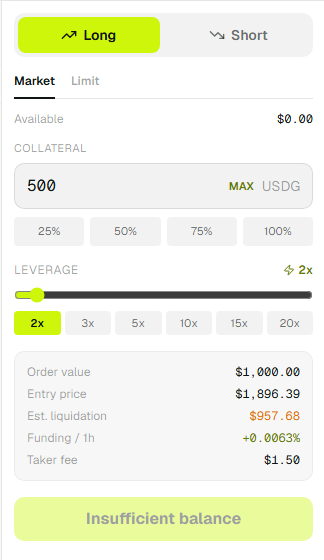
- Deposit collateral. Positions are margined in USDG.
- Open. Pick a market, side and leverage. Your position size = collateral × leverage. A taker fee applies on the notional value.
- Hold. Unrealized PnL moves tick-by-tick with the index price. Funding accrues hourly (see Funding & Fees).
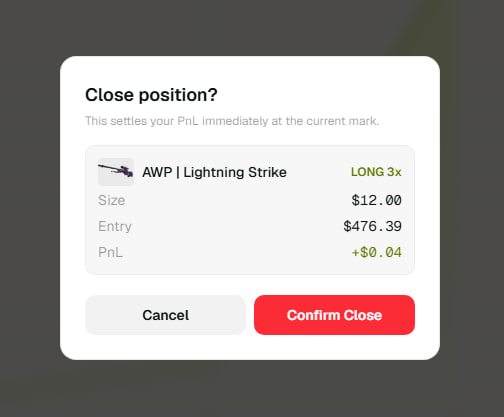
- Close. Close at any time; PnL is settled to your USDG balance. If the index reaches your liquidation price first, the position is liquidated (see Liquidations).
Worked example
You open a 10x long on AWP | Dragon Lore at $12,250 with $500 collateral:
Position size   = $500 × 10          = $5,000
Units           = $5,000 / $12,250   = 0.408 DL
Price +2%  →  PnL = 0.408 × $245     = +$100   (+20% ROE)
Price −2%  →  PnL                      = −$100   (−20% ROE)
Liquidation ≈ $12,250 × (1 − (1/10 − 0.5%)) = $11,086Who is the counterparty?
The Liquidity Vault is the protocol-owned counterparty: USDG depositors take the other side of trader flow and earn taker fees, with gains and losses shared pro-rata. Open-interest caps, hourly funding and continuous liquidations keep exposure balanced. The vault opens to public deposits at launch - see Roadmap.